How to Photograph a Solar Eclipse Safely
Photographing a solar eclipse can be unforgettable, but it requires timing, preparation, and careful attention to safety. The August 2, 2027 Eclipse of the Century will attract photographers across southern Spain, North Africa, the Middle East, and beyond.
Equipment for Eclipse Photography
To photograph a solar eclipse safely and effectively, many observers prepare the following:
- DSLR or mirrorless camera
- telephoto lens, often 200 mm or longer
- solar filter for the lens during partial phases
- tripod for stability
- remote shutter or timer to reduce movement
Without a proper solar filter, pointing a camera at the Sun can damage your sensor and your equipment.
Safety First
Keep the solar filter on during the partial phases. Only photographers who understand totality timing and are in the path of totality should consider removing it during totality itself.
Timing Is Everything
The most dramatic eclipse images often happen around totality, when the corona becomes visible and the scene changes quickly. This phase is short, so preparation matters as much as camera gear.
Many eclipse photographers use mobile apps to track the exact timing of the phases so they can stop guessing and focus on framing, exposure, and safe operation.
Using an Eclipse Timer During Photography
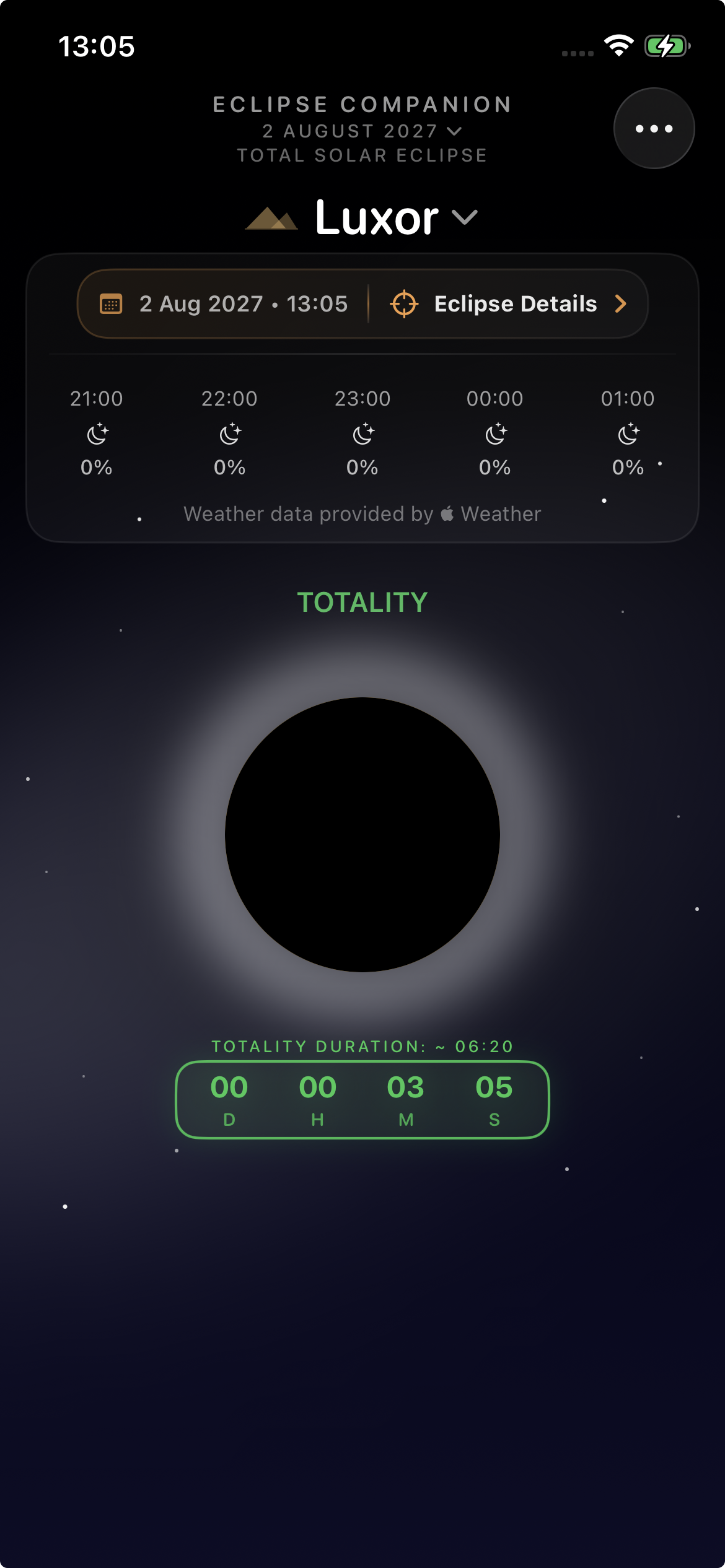
Apps like Eclipse Companion help photographers prepare for key moments with precise countdowns and notifications. That lets you pay attention to your camera setup and the sky instead of constantly checking the clock during the long 2027 totality.
Practice Before Eclipse Day
The best setup is the one you have already rehearsed. Test your camera workflow, filter removal plan, and timing approach before eclipse day.
Visit the homepage to see how Eclipse Companion supports eclipse observers and photographers on iPhone and Android.